What is Semantic Search & How It Affects SEO/Marketing
Imagine asking your digital assistant a complex question and receiving a perfectly tailored, conversational answer. It feels like magic, but this interaction is the result of semantic search. By understanding the context and the ‘why’ behind your query, search engines have transformed into sophisticated reasoning systems. Learning what is semantic search (& how does it affect your SEO and marketing) is essential for mastering this transition. Moving away from rigid keyword matching allows you to align your content with user intent. This ensures your brand stays visible in an era where AI-generated answers are the new default.
What is Semantic Search and Why Does It Matter?
Semantic search is a methodology where search engines prioritize user intent and the contextual meaning of a query rather than relying on exact keyword matches. Instead of hunting for pages containing specific terms, the engine interprets the motive behind your request. It determines if you are looking for a quick fact, a product, or an explanation of a complex concept.
The Shift from Librarians to Reasoners
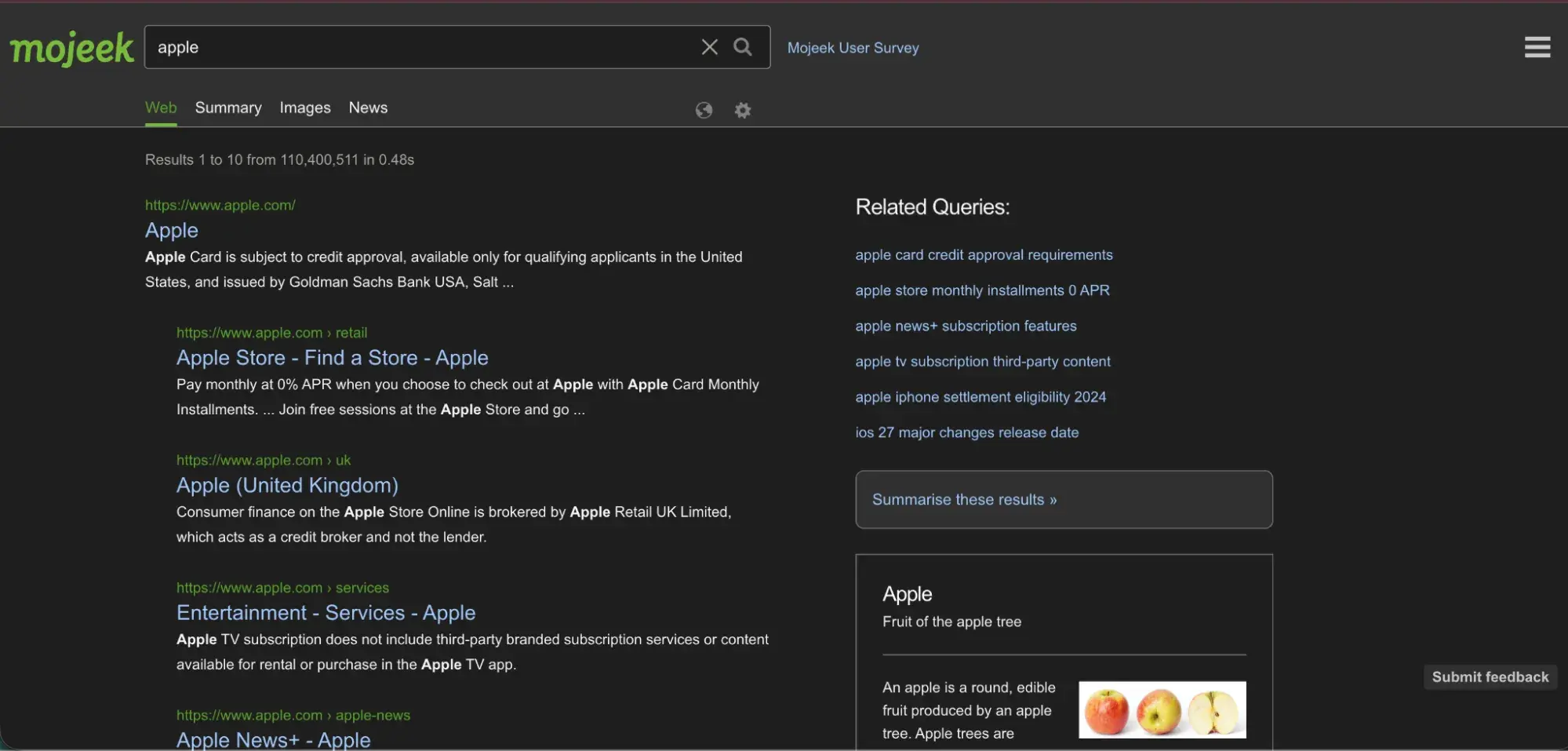
In the early days, search engines functioned like rigid librarians. If you searched for ‘best running shoes,’ the engine displayed pages that explicitly contained those words, often ignoring whether the content was actually helpful. Today, we have moved into the era of reasoning systems. These AI models act as intelligent assistants that map concepts, relationships, and entities.
This evolution is fundamentally changing how semantic search works. Modern engines process human language in a way that mimics real understanding. When you ask a complex question, the system looks at the surrounding context to determine if you need a shopping guide, a review, or a technical breakdown of how a sneaker is manufactured.
Why This Matters for Your Strategy
For marketers, what is semantic search for marketing is no longer just a technical curiosity; it is the cornerstone of modern visibility. In the age of AI-generated answers, you cannot rely on keyword stuffing to rank. If your content doesn’t provide contextually relevant answers that align with user intent, AI-driven search ecosystems may bypass your site entirely.
Visibility today depends on being understood by these systems. When your content demonstrates topic authority, it becomes a trusted source for the AI to cite. Implementing semantic SEO tactics ensures your business provides the most helpful answer for the user’s specific problem. By shifting your focus from chasing singular search terms to mastering search intent optimization, you secure a sustainable advantage in an increasingly AI-focused digital landscape.
How Semantic Search Actually Works
Understanding how semantic search works requires looking past simple word matching. Instead of looking for a document with the exact sequence of words you typed, modern systems analyze the underlying meaning, context, and relationships between concepts. It is the difference between a basic card catalog and a well-read librarian who understands exactly what you need.
Decoding Intent and Entities
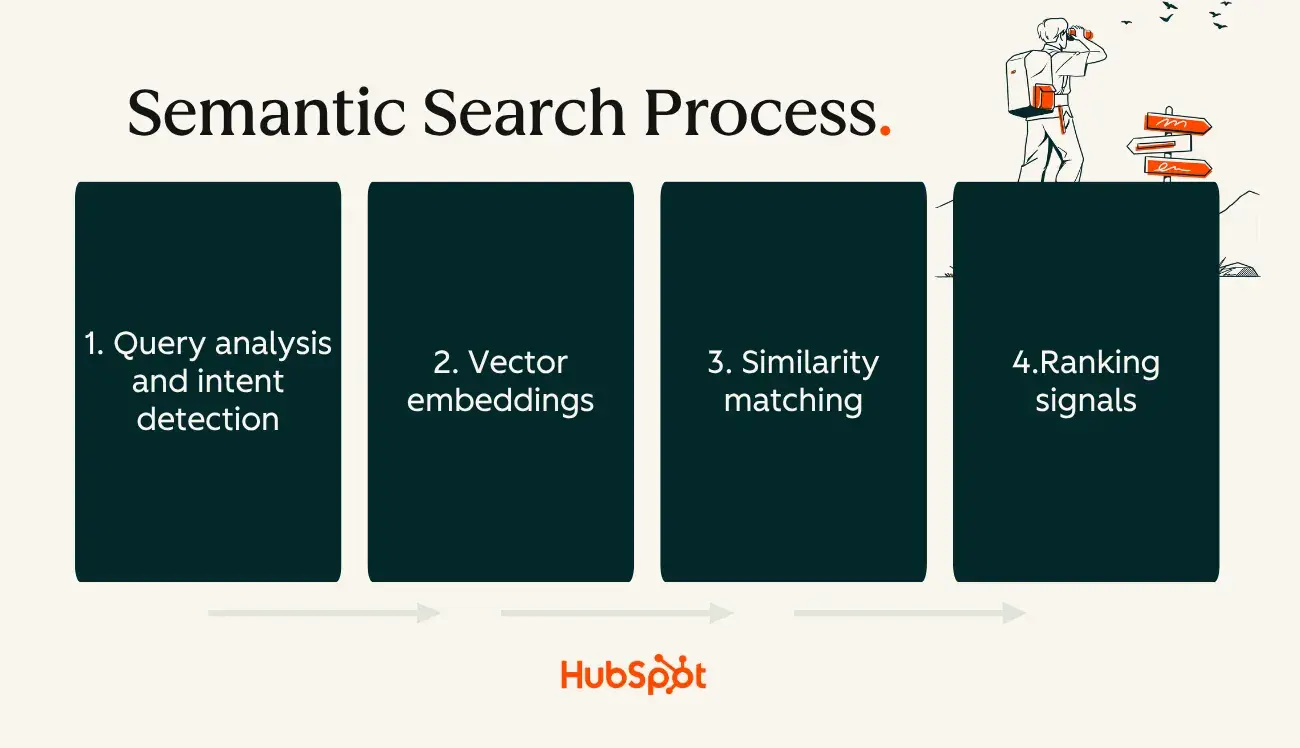
The process begins by identifying your goal, which is known as intent detection. The system interprets your query to determine if you want to buy something, find a website, or learn about a topic. Once the intent is clear, the engine performs entity recognition. It identifies people, places, organizations, or concepts within your query. By recognizing these as distinct real-world objects, the search engine builds a map of relevant information.
Vector Embeddings and Conceptual Closeness
The technology relies on vector embeddings. Imagine every concept in the world plotted on a multidimensional graph. In this mathematical space, related concepts sit closer together. For example, ‘coffee’ and ‘espresso’ are positioned near each other, while ‘coffee’ and ‘volcano’ are far apart. When you search, the engine converts your query into coordinates and retrieves content that lives in the same ‘neighborhood.’
Comparison of Search Approaches
| Feature | Keyword Search | Semantic Search |
|---|---|---|
| Focus | Exact word matches | User intent and meaning |
| Content Analysis | Surface-level keywords | Context and entities |
| Relationship Mapping | Limited | High (via Knowledge Graphs) |
| User Experience | Rigid; requires specific terms | Conversational and flexible |
The Role of Knowledge Graphs and NLP
To bridge the gap between human language and machine logic, search engines rely on Natural Language Processing (NLP) and massive Knowledge Graphs. Think of a Knowledge Graph as a giant, interconnected web of facts. It stores millions of entities and defines the relationships between them. When you ask a question, the engine uses NLP to parse your sentence structure and queries the Knowledge Graph to retrieve accurate, fact-based answers. This technology ensures that when you perform search intent optimization, you signal to these systems that your content is an authoritative source.
The Direct Impact of Semantic Search on Marketing
Understanding what is semantic search (& how does it affect your SEO and marketing) is the foundation of modern digital growth. When you stop chasing isolated search terms and start addressing the deeper questions your audience is asking, you transform your marketing footprint.
Building Authority Through Topic Clusters
Traditional SEO often felt like a scavenger hunt for high-volume keywords. Today, search engines prioritize topical authority. By organizing your content into topic clusters—where a central pillar page links to detailed sub-topics—you signal to algorithms that you are a comprehensive resource on a specific subject.
Why Intent Alignment Wins Over Bot Optimization
In the past, SEO was often about ‘tricking’ the system by repeating keywords. That era is over. Modern search intent optimization focuses on the human behind the keyboard. Are they looking to buy, to learn, or to solve a problem? When your content matches that intent, you provide value rather than just ‘optimized’ fluff. This shift is the core of a successful AEO strategy—optimizing your information so clearly that it becomes the natural answer for AI search tools.
Semantic Relevance and User Engagement
| Metric | Traditional Keyword SEO | Semantic Search Approach |
|---|---|---|
| User Focus | Keyword Density | Depth & Context |
| Content Structure | Siloed Pages | Interconnected Clusters |
| Engagement | Higher Bounce Rate | Increased Time-on-Page |
| Authority | Low/Fragmented | High/Centralized |
Search engines monitor these signals closely. If users find your content helpful and remain on your site to learn more, your rankings will climb. By focusing on the meaning behind your content, you build a sustainable, authoritative presence.
Optimizing for a Semantic Future
Adapting to a semantic environment means moving beyond keyword stuffing. To succeed, focus on how AI engines interpret the depth and context of your content.
Structure Your Headings for Voice and AI Queries
People don’t speak to their voice assistants like they type into a search bar. To capture this traffic, format your headings as direct questions that your target audience is likely to ask. This strategy forces you to organize your content around real-world problems rather than just search volumes.
Use Structured Data to Define Your Entities
Search engines rely on structured data (or Schema markup) to decode the meaning and context of your content. Think of structured data as a labeling system that tells search engines exactly what an entity is. By implementing Schema markup, you help search engines define entities and relationships clearly, which is a foundational element of semantic SEO tactics.
Implement the Answer First Method
The ‘Answer First’ method is a powerful technique for search intent optimization. It involves providing a clear, direct answer to the query within the first 40–60 words, followed by supporting details. According to AEO/GEO, this structure increases the likelihood of your content being extracted and cited by AI systems.
| Approach | Typical Result |
|—|—|—|
| Traditional | Lengthy intro, keyword-heavy context, answer buried at the end. |
| Answer First | Direct, concise answer; provides immediate value; high AI citation potential. |
When you adopt this structure, you prioritize the reader’s need for speed while signaling to AI models that your content provides high-quality, actionable information.
The era of trying to trick search engines with exact keyword matches is gone. By shifting your focus to the broader, meaningful context of your industry, you build a sustainable competitive advantage. This approach ensures your content remains relevant to human readers and the increasingly sophisticated AI systems that interpret their intent. Start your content audit today to ensure your brand remains the go-to authority in an AI-driven search landscape.
AEO/GEO
Want to learn more?
Contact us for direct consultation and support.