You know that hollow feeling—staring at a labyrinth of spreadsheet cells, trying to distill hundreds
You know that hollow feeling—staring at a labyrinth of spreadsheet cells, trying to distill hundreds of hours of customer data into a single, cohesive avatar. You spend weeks manually mapping demographics and psychographics, only to find that by the time you launch your campaign, the market has shifted, and your insights have gone stale. It is exhausting, inefficient, and often leads to guesswork that misses the mark entirely.
There is a better way. Moving beyond manual labor to let technology do the heavy lifting provides much-needed clarity. Transitioning to AI Target Audience: What I Learned [+ Tools to Try] helps clear the fog. Instead of relying on static, outdated assumptions, you can tap into living data streams that reveal hidden behavioral patterns in real time. AI doesn’t just crunch numbers; it identifies the why behind the who, turning fragmented information into a precise roadmap for your marketing strategy. This approach amplifies your intuition, giving you the clarity to connect with your customers exactly when—and where—they are ready to engage.
Why AI Audience Targeting is Changing the Game
Moving away from the traditional, rigid way of defining audiences is perhaps the biggest shift in modern marketing. Previously, marketers relied on static demographic buckets—think “females, ages 25–34, living in urban areas”—to segment their reach. While these broad categories provided a starting point, they were often based on sweeping generalizations rather than actual consumer behavior. By contrast, AI audience targeting strategy leverages machine learning to create dynamic, fluid segments based on real-time intent, psychographics, and behavioral patterns.
The End of Guesswork-Based Research
For years, audience research meant guessing which segments might be interested in your product, then spending weeks running manual A/B tests to see what stuck. It was a slow, labor-intensive process heavily reliant on intuition. Today, machine learning algorithms can ingest vast, fragmented datasets—from social media interactions and search queries to website dwell time—to uncover hidden connections in seconds. Rather than you deciding who your customer is, the data reveals who they are, often identifying high-value segments you didn’t even realize existed.
This shift toward AI-powered customer segmentation allows for a degree of personalization that was previously impossible. Instead of treating all users within a demographic bucket the same way, AI understands that one individual in that group may be in the research phase, while another is ready to convert immediately. The algorithm adjusts the messaging, timing, and platform delivery for each, creating a highly tailored experience that scales effortlessly.
Comparing Traditional vs. AI-Driven Approaches
Consider the core differences between outdated manual methods and modern automated systems to visualize how this transformation impacts your daily workflow.
| Feature | Traditional Targeting | AI-Powered Targeting |
|---|---|---|
| Precision | Broad, demographic-based | Hyper-specific, intent-driven |
| Data Source | Static, historical surveys | Dynamic, real-time behavior |
| Speed | Slow (manual analysis) | Immediate (automated processing) |
| Scalability | Limited by human capacity | Virtually limitless |
Why This Matters for You
The true power of this change isn’t just about efficiency—it’s about accuracy. When you embrace marketing data automation, you reduce wasted ad spend by ensuring your message reaches users who are statistically likely to convert. By moving from static assumptions to dynamic, evidence-based targeting, you stop guessing and start connecting. Transitioning to these tools might feel daunting, but it’s essentially the difference between shooting in the dark and using a laser-guided system to hit your growth targets.
Key Mechanisms: How AI Actually Learns Your Customers
AI audience targeting goes far beyond simple filtering. Instead of relying on manual segments you build from static spreadsheets, modern machine learning models synthesize vast, multi-source data to build deep, evolving profiles of your customers. This transformation relies on how AI ingests and connects behavioral, contextual, psychographic, and intent data in real time, moving your marketing from guesswork to precision.
Multi-Source Data Synthesis
To understand your customers, AI consumes data from various touchpoints simultaneously. It doesn’t just look at who someone is (demographics); it looks at how they act and why. AI target audience analysis involves these data types:
- Behavioral Data: Tracks clicks, time-on-page, past purchases, and navigation paths. This tells the AI what a customer actually does.
- Contextual Data: Analyzes the environment of the interaction, such as the time of day, device type, or even current industry trends impacting the user.
- Psychographic Data: Involves sentiment analysis of reviews or social interactions to gauge motivations, values, and interests.
- Intent Data: Identifies signals like high-frequency searches or abandoned carts that indicate a user is actively looking to buy or solve a problem.
The Real-Time Advantage
Traditional segmentation methods rely on frozen data—snapshots of your audience taken weeks or months ago. By the time you execute a campaign, that data is often stale. AI models operate differently by ingesting data continuously. Because these systems are predictive marketing tools, they adjust segment membership instantly. If a customer who previously showed researching intent suddenly clicks on a pricing page, the AI updates their segment in seconds. This allows you to serve highly relevant content at the precise moment a user is most receptive.
Rules-Based vs. Predictive Targeting
Understanding the difference between manual and automated approaches is critical for effective AI-powered customer segmentation.
| Feature | Rules-Based (Manual) | Predictive (AI-Driven) |
|---|---|---|
| Logic Basis | If/Then statements | Pattern recognition |
| Maintenance | High (manual updates) | Low (self-optimizing) |
| Adaptability | Low (static segments) | High (dynamic segments) |
| Scaling | Manual labor increases | Automated scale |
Rules-based targeting is like building a house with bricks; it’s sturdy but rigid. Predictive targeting is like building with smart, modular components that rearrange themselves based on the shifting needs of your audience. By leveraging marketing data automation, the AI handles the heavy lifting, allowing you to focus on strategy.
Practical Tools to Get Started With AI Targeting
You don’t need a PhD in data science to start leveraging predictive marketing tools. The market is currently flooded with user-friendly platforms designed to turn raw noise into actionable insights. By integrating these solutions, you stop guessing who your customers are and start serving them based on behavioral data.
Curated AI Targeting Toolbox
This selection represents a cross-section of tools that help you bridge the gap between knowing your audience and actually reaching them.
| Tool Name | Primary Best-For Category | Complexity Level | Ideal User |
|---|---|---|---|
| Userpersona | Persona Generation | Low | Freelancers |
| GapScout | Competitor/Market Insights | Low | Small Business |
| ExactBuyer | B2B Prospecting/Intent | Medium | Growing Teams |
| Pixis | Ad Optimization | High | Marketing Teams |
| SYMAR | Paid Search/Display | Medium | Marketing Teams |
Choosing the Right Approach for Your Business
Selecting a tool is only half the battle; ensuring it aligns with your existing workflow is critical. While AI-powered customer segmentation platforms offer sophisticated predictive modeling, they are most effective when your team has clear goals for their output.
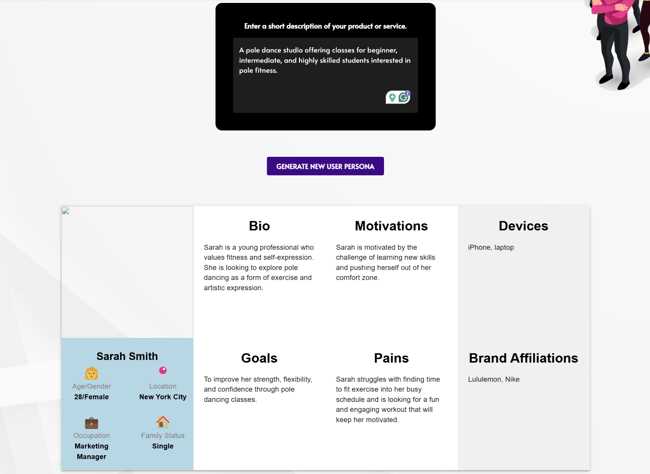
If you are a freelancer or a solo entrepreneur, starting with persona generation tools like Userpersona allows you to quickly validate your assumptions. Conversely, if you are a marketing manager for a growing team, investing in platforms like Pixis—which automate the continuous adjustment of ad targeting—is a significant force multiplier. Always begin by defining the problem you are trying to solve. Start with one, master its reporting, and then expand your toolset as your audience insights grow more granular.
A Simple 4-Step Plan to Implement AI Targeting
Moving from manual audience research to a sophisticated AI audience targeting strategy might feel daunting, but you don’t need a massive data science team to get started. The most successful implementations follow a structured approach.
Step 1: The Data Audit
Before selecting any tools, you must understand your current marketing data automation landscape. Catalog exactly what assets you have. AI is only as powerful as the data you feed it. Create a simple spreadsheet listing your primary data sources, the frequency at which that data is updated, and any gaps you notice.
Step 2: Choose One Low-Risk Channel
The most common mistake is trying to apply AI to everything at once. Instead, identify one low-risk channel, such as your email newsletter segmentation or a single social media ad set. By isolating one channel, you reduce the impact of potential errors while you learn how the algorithm behaves.
Step 3: Leverage Accessible Entry Points
You don’t need a bespoke enterprise software solution to build internal intuition. Start with free or low-cost predictive marketing tools that offer free trials or freemium tiers. Use these to experiment with persona generation or predictive modeling.
Step 4: Treat KPIs as Feedback Loops
Implementation isn’t a set and forget process. Your KPIs—such as click-through rates, conversion rates, or customer acquisition costs—serve as essential feedback loops. Regularly compare your manual results against the AI’s output. Consistent monitoring transforms the technology from a black box into a reliable engine for precision.
The shift from manual, spreadsheet-heavy guesswork to AI-powered precision is a fundamental transformation in how you connect with your customers. You no longer have to rely on intuition or stale demographic buckets to reach the right people. Instead, you can leverage real-time behavioral insights to deliver messages that resonate exactly when they matter most.
Remember that AI is not here to replace your human insight. Think of it as a superpower for your existing marketing efforts—a partner that handles the heavy lifting of data analysis, freeing you up to focus on the creative strategy and authentic connection that only a human can provide. If you feel overwhelmed, start small. Pick one tool or one channel where you want to see better results. Once you see the impact of that data-driven shift, your confidence will grow, and you’ll naturally find ways to integrate these insights across your broader marketing plan.
AEO/GEO
Want to learn more?
Contact us for direct consultation and support.