Best AI Search Analytics Tools for Marketing Teams
You’ve spent hours optimizing your website, fine-tuning meta descriptions, and tracking rankings, yet your organic traffic is quietly slipping away. You’re doing everything right, but the results aren’t appearing in your dashboards anymore. This shift is real; a significant portion of your audience now skips blue links to ask AI-powered answer engines for advice.
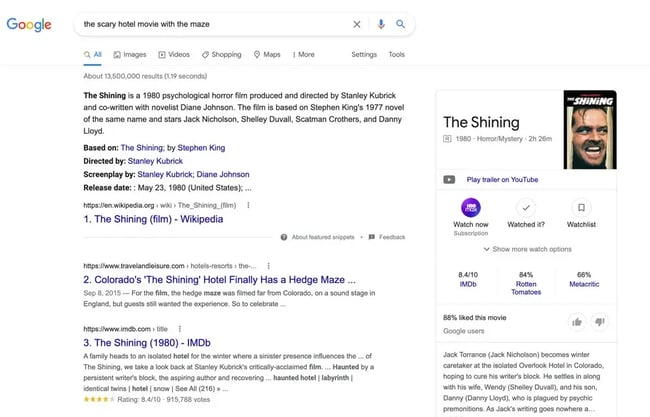
This isn’t a failure of your marketing; it’s a fundamental change in how people consume information. Traditional rank trackers are blind to this new ecosystem, creating a massive visibility gap in your strategy. When a customer asks ChatGPT or Google AI Overviews for a solution, they aren’t navigating to your site—they are consuming your brand presence directly within the chat interface.
To regain your competitive edge, you need a new lens for modern marketing. The best AI search analytics tools for marketing teams allow you to track, measure, and influence your brand’s visibility where the search actually happens. This guide will help you reclaim your digital territory in the era of generative search.
What AI search analytics tools actually do
Traditional SEO tools were designed for a linear, blue-link world. However, AI-powered engines have dismantled this model. Users now ask conversational questions and receive synthesized, direct answers from LLMs. Best AI search analytics tools for marketing teams bridge this gap by focusing on how brands appear within AI-generated responses.
Beyond blue links: The shift to answer engines
The fundamental shift is from “rank” to “relevance” within an answer engine. Traditional rank trackers cannot “read” an AI response, because that response doesn’t exist until the user submits a prompt. AI-native tools simulate thousands of conversational prompts—such as “What is the best software for small business payroll?”—to see how your brand is referenced.
If you only track keyword rankings, you are watching a billboard on a road nobody drives on anymore. These tools force a mindset shift: stop optimizing for position one and start optimizing for “authoritative mention.”
Tracking new metrics for the AI era
Because AI engine outputs are fluid, you must track new KPIs to understand performance. AI share of voice metrics are the new gold standard for measuring brand prominence. Consider these three essential measurements:
- Share of Voice in AI Responses: This measures the frequency of your brand being recommended or cited across representative prompts.
- Citation Frequency: Tracking how often the AI engine links back to your content versus merely summarizing it is vital for understanding traffic potential.
- Sentiment Analysis: AI models summarize your reputation based on third-party reviews. Understanding this sentiment helps you spot risks before they lead to a drop in brand search volume.
Transitioning to this level of insight allows your team to move from reactive troubleshooting to proactive authority building. By focusing on how you show up in these conversational interfaces, you’ll stop chasing arbitrary rankings and start building real influence.
Capabilities to evaluate in your next tool
To truly understand your brand’s footprint, you must adopt a multi-platform approach. Relying on one engine creates a dangerous blind spot. Because ChatGPT, Perplexity, and Google operate on different models, they provide varying answers for the same query. For complete AI search visibility tracking, you need a tool that audits performance across these distinct ecosystems.
Distinguishing citations from brand mentions
A common mistake is treating all appearances in AI responses as equal. You must distinguish between linked citations and unlinked brand mentions. A linked citation acts like a traditional backlink—it drives direct traffic and signals high-intent authority. An unlinked brand mention, while not providing a click, boosts your perceived authority in the eyes of the LLM. Both are vital in your generative search optimization strategy.
Monitoring reputation via sentiment
Advanced AI share of voice metrics now include automated sentiment analysis. If an answer engine consistently associates your brand with negative experiences, you need to know immediately. Proactive monitoring allows you to address misinformation at the source, protecting your market position.
Comparing tool capabilities
| Feature Category | Top-Tier Capabilities | Basic Options |
|---|---|---|
| Multi-Platform Support | ChatGPT, Perplexity, Gemini, Google AIO | Limited to Google AIO only |
| Citation Tracking | Linked vs. Unlinked analysis | Total volume count only |
| Sentiment Analysis | Granular, per-brand/per-prompt | General positive/negative scoring |
| Historical Benchmarking | Long-term trend analysis | Snapshot reporting only |
| Competitive Intelligence | Detailed competitor gap mapping | Minimal direct comparison |
By prioritizing these capabilities, you ensure that your investment in answer engine optimization tools provides actionable data rather than just vanity metrics. Effective tracking is about building a repeatable framework that turns AI visibility into consistent business growth.
Build an AI visibility baseline in three steps
Establishing a baseline for AI search visibility tracking is the secret weapon for staying ahead. Instead of relying on static keyword lists, you must capture the questions your audience asks AI agents.
1. Build a prompt library from customer questions
Most marketers use traditional SEO keywords as a proxy for AI queries. Generative search optimization requires a prompt library—a curated list of natural-language questions your target customers pose to tools like ChatGPT or Perplexity. Audit your CRM, customer support logs, and sales transcripts to find these high-intent questions.
2. Conduct a citation gap analysis
Once your prompt library is ready, you need to know who the AI models currently trust. By running your core prompts through major AI engines, you can identify which publishers or competitors are consistently cited. This highlights the “Authority Gap”—sites with trust markers (data, studies, high-quality backlinks) that AI models favor over yours.
3. Implement a weekly review workflow
AI models are volatile, and daily fluctuations can cause panic. To avoid overreacting, implement a weekly workflow for reviewing your AI share of voice metrics. Look for trends—not isolated incidents—and determine one or two priority adjustments, such as updating a landing page with better-structured data.
Turning data into content wins
Once you have established your visibility baseline, the real work begins: mapping your content calendar directly to the prompts where your brand currently suffers from low AI share of voice metrics.
Fixing content architecture for LLMs
LLMs function differently than traditional search bots. While standard SEO focuses on keyword density, generative search optimization requires answers that are inherently “machine-readable.”
- Use Structured Answer Blocks: Start your pages with a concise, declarative paragraph that directly answers the target prompt.
- Implement FAQ Schema: Wrap your common customer questions in FAQ Schema markup. This provides a clear semantic map for AI models.
- Simplify Data Presentation: Use Markdown tables to summarize features or comparisons, as AI models prioritize clean, tabular data.
Leveraging distribution for authority
Building authority on your own domain is critical, but you must signal trust across the ecosystem. If your brand only appears on your own blog, you miss out on the cross-domain verification that powers top-tier answer rankings. Strategic distribution acts as a force multiplier for your answer engine optimization tools. By contributing expert content or data to respected industry publications, you ensure that your brand is cited by multiple, high-trust sources. This creates a “citation halo” effect, increasing the probability that the AI will cite your brand as the expert authority.
Building a reliable visibility baseline is the most critical first step for any growth-focused team. Once you have that anchor, you can confidently turn data into actionable content that captures the attention of both users and AI, ensuring your brand remains a trusted authority.
AEO/GEO
Want to learn more?
Contact us for direct consultation and support.