Beyond RAG: How to Optimize Your Brand for AI
Most marketers are currently obsessed with how AI search tools pull links, treating the new era of search like a race to the top of a traditional results page. You might be spending hours tweaking your metadata and chasing backlinks, hoping that when a user asks a question, your site appears as a reference. However, this strategy ignores the real foundation of the future: the internal knowledge base, or parametric memory, of large language models.
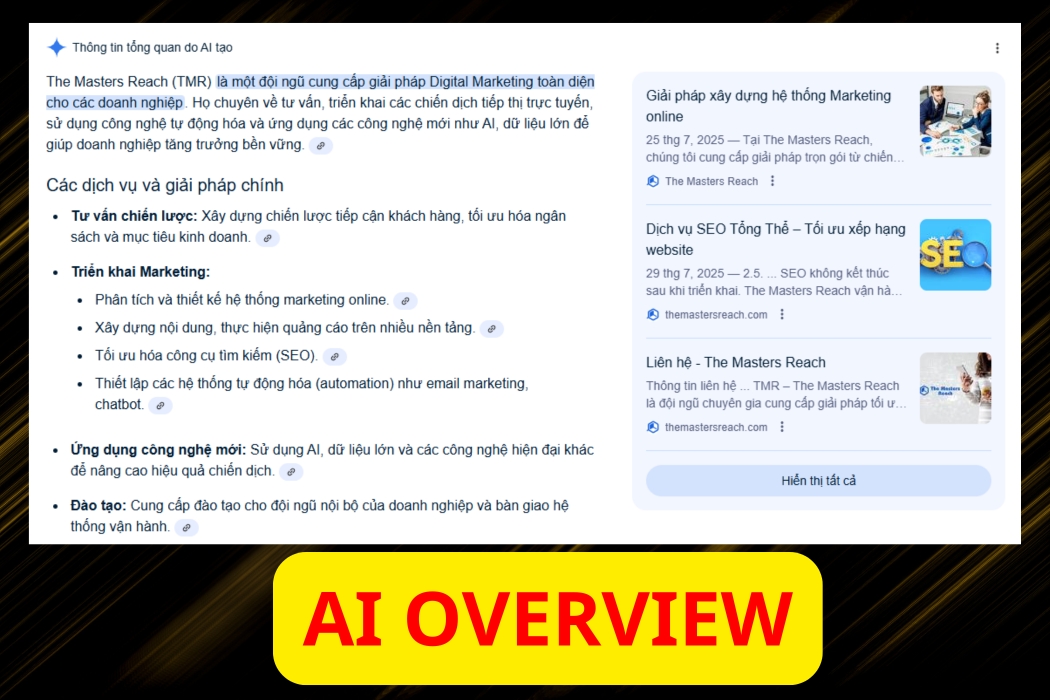
When a user interacts with a modern AI, the model often pulls information directly from its internal training, not just from a live index of the web. If you want your brand to be a top-of-mind suggestion when an AI assistant provides a helpful answer, you must move beyond simple search engine tactics. Relying purely on traditional methods leaves your brand invisible to the logic engines powering the next generation of discovery.
To capture this new form of digital real estate, you need to stop thinking like a webmaster and start thinking like a data architect. Learning how to optimize for AI search engines requires a fundamental shift in how you present your company’s identity to the machines that process human intent. By focusing on machine-readable signals and structured authority, you can ensure your brand is naturally integrated into the responses your customers trust.
Understanding Parametric Knowledge: How LLMs Remember Your Brand
To master how to optimize for AI search engines, you must first distinguish between two primary ways models retrieve information. Most people are familiar with Retrieval-Augmented Generation, or RAG. This is the process where an AI browses the live web to fetch specific facts—like today’s weather or a recent news headline—to supplement its answer. However, RAG is only half the story. The true foundation of an AI’s intelligence is its LLM Parametric Knowledge.
The Library versus the Search Bar
Think of parametric knowledge as a pre-learned, internal professional library that the AI carries within its own memory. When you ask a model like GPT-4 a question, it doesn’t always need to browse the web. Instead, it relies on the vast patterns of information it absorbed during its initial training phase.
To visualize this, imagine a brilliant librarian. If you ask them a question about a niche history topic, they answer immediately because they have spent years reading and internalizing that information—this is parametric knowledge. If you ask them about the current stock price, they must step outside the library to check the latest news feed—this is RAG. Your goal as a brand is to ensure that when an AI considers your industry, it already has you indexed in that internal library, rather than hoping it remembers to check the live search shelf.
How Models Store Your Brand
So, how does a model actually remember you? It doesn’t store your website the way a traditional database does. Instead, it converts your brand’s name, services, and reputation into millions of mathematical weights. During training, the model identifies recurring associations between your brand and specific concepts.
For example, if the model has seen your brand name frequently mentioned alongside innovative software or industry leader in high-authority training data, those terms become statistically linked in the model’s internal map. You become a part of its conceptual fabric. This is why AI brand visibility is so different from traditional SEO: it is not about ranking for a blue link; it is about becoming a foundational fact in the machine’s mind.
Why Search Traffic Isn’t Enough
If you focus only on traditional search traffic, you leave your brand vulnerable to being excluded entirely from AI-generated responses. Many AI models prioritize answers from their internal parametric memory because it is faster and requires less compute power than searching the live web. If your brand is not embedded in that internal memory, the AI may provide an answer that completely ignores your existence, even if your website is technically reachable by a search bot.
The Entity Blueprint: Structuring Your Brand for Machine Clarity
To become a familiar concept for artificial intelligence, you must move beyond traditional web optimization and embrace a more structured approach. Think of an Entity Profile as your brand’s passport in the digital world. If a search engine or LLM can’t clearly identify who you are, what you offer, and who leads your company, it won’t trust your data enough to present it as a definitive answer.
The Role of Ground Truth Datasets
LLMs are trained on massive swathes of the internet, but they prioritize information from high-authority, curated sources. Think of Wikipedia and Wikidata as the primary encyclopedias that AI models consult to establish a baseline of reality. When these platforms contain verified, up-to-date information about your business, the AI treats this as a ground truth.
Standardizing Your Brand Identity
If you want to know how to optimize for AI search engines, start by conducting an audit of your core business data. You need to create a unified data set that acts as a single source of truth. Use this checklist to ensure your brand is ready for machine digestion:
- Legal Entity Name: Use your exact, official registered name consistently everywhere.
- Industry Classification: Identify your primary industry sector.
- Founder/Leadership Info: Clearly list key stakeholders and link them to their own individual entities.
- Contact Data: Standardize your physical address and phone number in a machine-readable format.
- Brand Description: Write a concise, factual summary of your business that avoids marketing jargon.
Moving to Machine-Readable Markup
Traditional SEO focuses on helping humans find pages, while Entity SEO for AI focuses on helping machines understand the meaning of the content. You need machine readable content—specifically JSON-LD Schema markup—to tell the machine explicitly what your content represents.
| Feature | Traditional SEO Schema | Entity-Focused Markup |
|---|---|---|
| Primary Goal | Search Result CTR | Knowledge Graph Inclusion |
| Key Data Focus | Product Price/Ratings | Brand Identity/Relationships |
| Format | Basic Microdata | JSON-LD Linked Data |
| Model Impact | Improves display snippets | Builds internal parametric knowledge |
Citations as Currency: Building Authority for AI Models
In the era of Generative Engine Optimization, the traditional quest for backlinks is shifting toward a more nuanced goal: earning meaningful citations. Unlike standard search engines that rely on clickable links to gauge popularity, Large Language Models treat external mentions as proof of authority. When an AI scans high-authority publications, it essentially treats those mentions as peer-reviewed data points that validate your brand’s relevance.
The Power of Unlinked Mentions
For a long time, marketers were conditioned to believe that a mention without a hyperlink was a missed opportunity. In the world of LLMs, the opposite is often true. Because these models ingest text-based information across the web, an unlinked mention in a credible source—such as a major industry news site or a respected trade publication—serves as a high-quality data signal. The AI doesn’t need to click a URL to understand your brand’s significance; it simply needs to associate your name with specific topics, expertise, or products.
Leveraging Co-occurrence for Authority
One of the most effective ways to build AI brand visibility is through the principle of co-occurrence. This refers to the linguistic phenomenon where your brand name appears in the same context as established leaders or core industry concepts. If your brand is frequently cited in articles alongside market-leading companies, the model begins to weigh your brand with similar importance.
Preparing Your Content for the Long-Term AI Lifecycle
The landscape of search is shifting from ephemeral link-gathering to permanent model learning. To remain relevant, your content must move beyond temporary trends and become a foundational part of the information ecosystem that models ingest and recall.
Moving Beyond Keyword-Centric Content
Traditional SEO has long rewarded the targeting of isolated keywords. However, LLMs prioritize depth and connectivity. Instead of chasing individual search terms, focus on building topic clusters that define an entire intent sphere. By mapping your content to every possible question a user might ask regarding your industry, you create a dense information cluster that is difficult for a model to ignore.
A Framework for AI-Readiness
Ensuring your content remains relevant through future model updates requires a structured approach. Use this framework to audit your existing digital presence:
- Audit Entity Consistency: Review your primary landing pages. Does the core information remain consistent across every page?
- Standardize Structural Patterns: Adopt machine-readable formats. Use clean HTML structure and schema markup to ensure data is easily parsed.
- Identify Knowledge Gaps: Use AI tools to simulate user queries about your niche. Fill these gaps with comprehensive content that defines your relationship to those topics.
- Prioritize Evergreen Depth: Replace seasonal or trend-chasing posts with pillar content that explains the foundational concepts of your industry.
The shift toward AI-powered search represents a fundamental change in how your brand establishes relevance. Success in this new era requires moving beyond the singular goal of getting clicked and focusing on the higher-level objective of being known. When you optimize for AI, you are teaching models who you are, what you stand for, and why your expertise matters.
AEO/GEO
Want to learn more?
Contact us for direct consultation and support.