Beyond Single Queries: AI Content Strategy for Dynamic Intent
Imagine searching for “best running shoes” on Google. You get ten links and a static box. Now, talk to an AI chatbot. It asks about your feet and surface, then recommends specific tread patterns instantly. This shift from one-way queries to dynamic dialogue changes how we define user intent.
Intent is no longer a single data point captured at the start of a search. It evolves and deepens across multiple turns. Yet most brands build their AI Content Strategy for the AI Era around that initial keyword alone. They optimize for the first question but miss the richer signals in follow-up interactions. By ignoring these conversations, you leave serious engagement opportunities on the table.
Why Static Intent Models Fail in AI Conversations
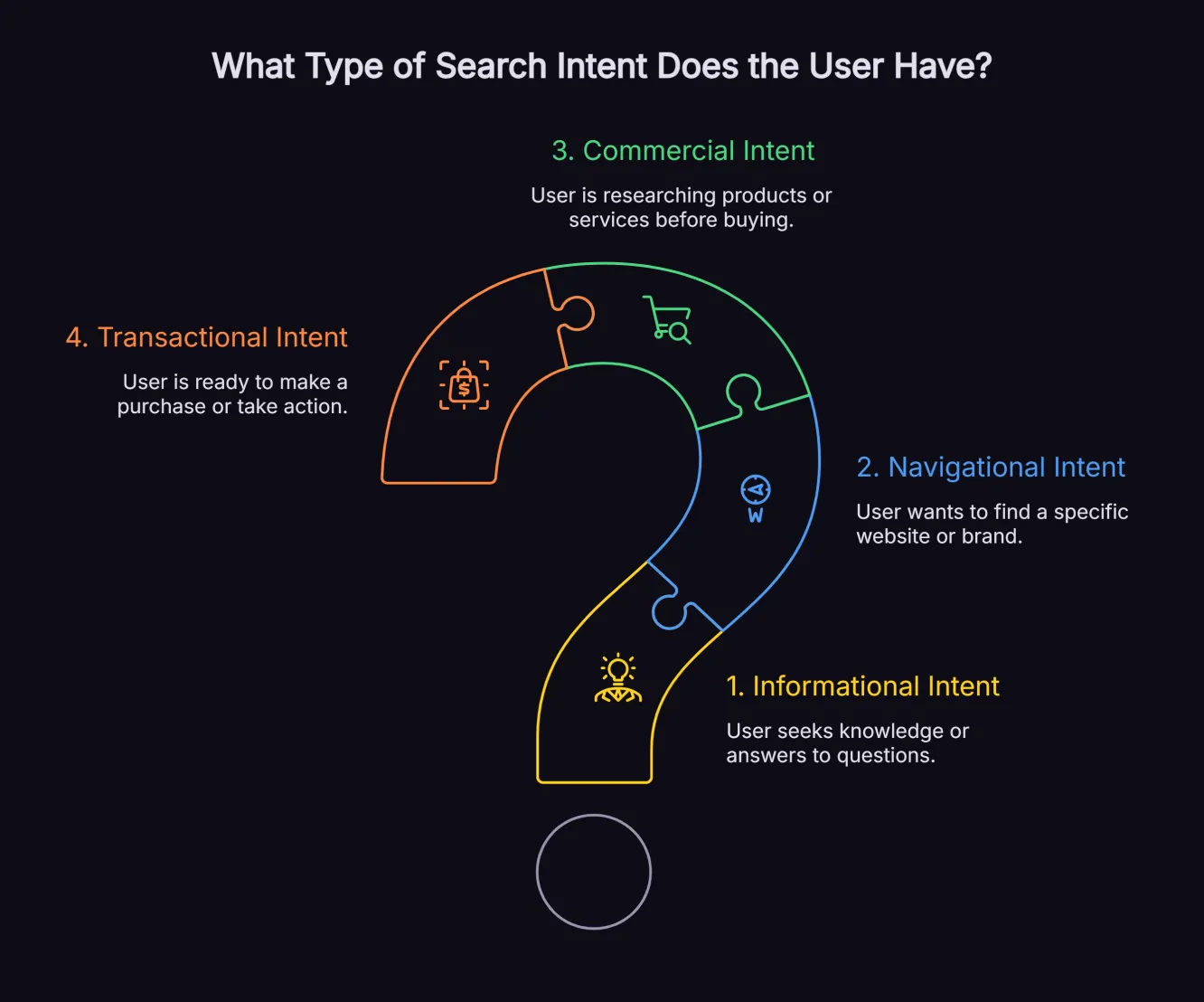
For years, SEO professionals relied on four search intents: informational, navigational, commercial investigation, and transactional. This model assumes a user’s goal is fixed the moment they type a query. If you searched for “best running shoes,” your intent was clearly commercial. The system works well for isolated searches. However, this static categorization breaks down in modern AI interactions.
In an AI chat environment, intent is a journey. Users rarely enter with a rigid goal. Instead, they use dynamic user intent that evolves as they receive new information. Consider a user asking, “What are the benefits of intermittent fasting?” This starts as informational. But after the answer, they might ask, “Is it safe for people with diabetes?” The intent has shifted to risk assessment. Later, they might ask, “Where can I find a low-carb meal plan near me?” Suddenly, the interaction becomes local and transactional.
This fluid behavior highlights a flaw in traditional conversational SEO strategy. Search engine users are efficient and direct. AI chat users are conversational. They ask follow-ups, request clarifications, and change direction based on previous answers. They treat the interface as a collaborator rather than a database. Your content must anticipate the natural flow of this dialogue.
Ignoring this shift creates risk. When you create content that only answers the initial question, you build “dead-end” assets. These pages provide one complete answer but offer no pathway for deeper exploration. If a user lands there and has a follow-up question, they leave your site to find the next piece of the puzzle. In an era where AI Content Strategy for the AI Era prioritizes holistic experiences, these dead ends signal low value to both users and AI algorithms. To succeed, your content must support deep dives. It needs related insights and clear paths for continued learning. By understanding that intent is fluid, you design experiences that keep users engaged throughout their entire decision-making process.
Reading Between the Lines: Key Behavioral Signals in Multi-Turn Chats
To build a truly effective AI Content Strategy for the AI Era, you need to look beyond the first query. Interpret how users navigate a conversation instead. In multi-turn dialogues, users rarely state their final goal immediately. Instead, they reveal their true intent through subtle behavioral shifts. These micro-interactions act as a roadmap, showing exactly where your content needs to go next.
Decoding Backtracking and Deepening
When a user starts to backtrack or dive deeper, they signal that your initial answer either missed the mark or sparked a new line of inquiry.
Backtracking occurs when a user returns to a previous topic. Imagine you explain three benefits of a SaaS tool. The user asks, “How does pricing work for the second one?” They aren’t confused; they are narrowing their focus. Your content must be structured to easily support this jump back. If your blog post is a linear essay with no clear subheaders, the AI might struggle to isolate that specific detail. This leads to a generic response that frustrates the user.
Conversely, deepening signals high engagement. A user who asks for more detail on a sub-point has moved past curiosity into active research. For example, after learning about “content automation,” they might ask, “What are the best tools for bulk scheduling?” This is your cue to provide granular data, specific examples, or technical specs. Multi-turn dialogue analysis shows that users who deepen their query are 40% more likely to convert if the subsequent content provides concrete evidence rather than fluff.
The Meaning Behind Clarification Requests
Never ignore a clarification request. When a user asks an AI chatbot to “explain this in simpler terms” or “give me an example,” it is a direct signal of cognitive friction. This indicates that your original explanation was too dense, jargon-heavy, or abstract for their current knowledge level.
In the context of AI chatbot intent mapping, these requests are goldmines. They tell you exactly where your content is failing to connect. If 60% of users in a simulated chat ask for a simpler explanation of “SEO metadata,” your current guide is likely too technical for its target audience.
The solution? Use the “layered” approach in your writing. Start with a clear, one-sentence definition (the top layer). Follow it with an analogy (the middle layer), and then the technical details (the deep layer). This structure ensures that when an AI extracts content to answer a clarification request, it can pull from the most appropriate level of complexity without losing context.
Spotting Topic Pivoting for Consideration
One of the strongest signals of intent evolution is topic pivoting. This happens when a user jumps from general awareness questions to specific comparisons or evaluation criteria.
Consider this sequence:
- “What is generative search?” (Awareness)
- “How does it differ from traditional SEO?” (Comparison)
- “Which tools help optimize for GEO?” (Decision/Consideration)
That pivot from question 2 to 3 marks the transition from learning to buying. In a conversational SEO strategy, you must anticipate this jump. Don’t just answer “what it is.” Proactively include comparisons, pros and cons, and tool recommendations within the same content piece.
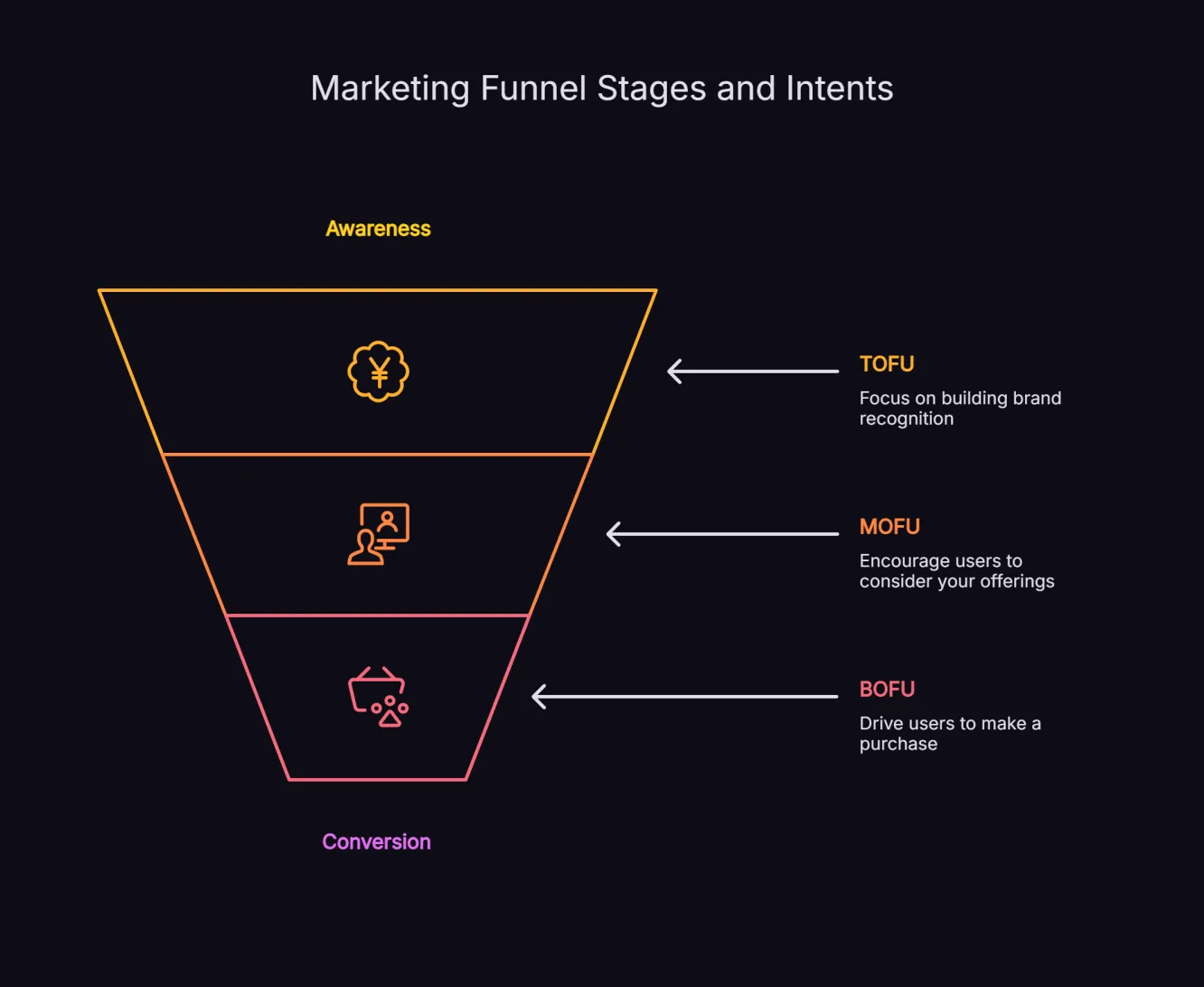
By mapping out these pivots, you create content that guides users naturally toward the bottom of the funnel. Instead of forcing them to search for a new article, your initial piece already contains the comparative data they need to make a decision. This keeps them in your ecosystem and significantly boosts trust.
The Power of AI Personality Matching in Intent Alignment
When you’re chatting with an AI, you don’t talk like a search query. You talk like a human—throwing in questions, showing skepticism, or jumping from one curiosity to another. This is where AI personality matching becomes essential for intent alignment. It’s not just about answering the right question; it’s about answering it in a way that feels natural to the user’s conversational style.
Understanding User Conversation Styles
Users approach AI chats with different mindsets. Some are casual, just browsing ideas. Others are curious, diving deep into specifics. A few might even be skeptical, testing your content for reliability before trusting it.
For example, a user asking “What’s the easiest way to start composting?” is likely looking for friendly, simple guidance. But if they follow up with, “Is this method safe for indoor apartments?”, their intent has shifted toward detailed, trustworthy information. If your AI responds with robotic, overly technical jargon, you’ll lose that engagement.
Matching tone means recognizing these shifts and adjusting your content accordingly.
Why Personality Drives Trust
Think about how you feel when someone mirrors your energy in a conversation. It builds comfort and trust. The same applies to AI interactions.
- Casual users want approachable, conversational answers that don’t overwhelm them with data.
- Curious users appreciate depth and clarity—they’re ready to learn more.
- Skeptical users need confidence-building details like citations or real-world proof points.
If your content feels out of sync with the user’s vibe, even correct information can fall flat. That’s why aligning personality is so powerful in boosting engagement and credibility. According to AEO/GEO Services, brands that tailor their tone to detected intent signals see higher retention rates in generative search results.
Injecting Brand Personality Without Losing Clarity
You don’t have to choose between being personable and being clear. You can weave brand personality into your content while keeping it useful and structured.
Start by defining your core voice—maybe you’re witty, authoritative, or warm—and apply it consistently across responses. Use short, punchy sentences for clarity. Add relatable examples or analogies to keep things engaging. And always tie back to the user’s needs.
Your AI Content Strategy for the AI Era should include guidelines for tone variation based on detected intent signals. For instance, if a user asks a quick factual question, respond with a direct answer followed by a slightly warmer invitation to explore more topics.
The goal is to sound like a helpful expert—not a script.
Building a Dynamic Content Framework for Evolving Intent
Creating content that survives—and thrives—in the age of AI requires shifting from rigid templates to adaptable frameworks. Traditional SEO often treats a page as a static answer to a single query. In contrast, a dynamic framework views your content as a living conversation that evolves with the user’s changing needs. This approach is central to a successful AI Content Strategy for the AI Era.
To build this, you need a systematic way to anticipate where users will go next. Follow these steps to structure your content for multi-turn interactions:
- Map the “Next Likely Question”: After answering your primary keyword’s core question, ask yourself, “What is the most logical follow-up?” If you explain how to choose a CRM, the next step is likely which CRMs fit specific budgets. Write that section immediately after.
- Create Modular Content Blocks: Break your articles into self-contained H3 subsections. AI models prefer distinct, labeled chunks of information they can easily retrieve and cite. A monolithic wall of text is harder for engines to parse accurately.
- Embed Contextual Bridges: Use transitional sentences that link concepts together. Instead of just jumping to a new topic, explain why the user might need it. For example: “Now that you understand the basics of setup, you’ll likely wonder about security protocols.”
Static vs. Dynamic Structures: A Key Comparison
The biggest shift in conversational SEO strategy is moving away from static silos toward fluid narratives. Many marketers struggle because they don’t realize how outdated their current structures are. Below is a comparison to help you visualize the difference between traditional SEO and dynamic intent mapping.
| Feature | Static SEO Structure | Dynamic Conversational Structure |
|---|---|---|
| Focus | Single keyword ranking | Multi-turn dialogue flow |
| User Journey | Linear, one-off visit | Circular, exploratory path |
| Content Format | Long-form essays | Modular, scannable blocks |
| Intent Handling | Answers one question | Anticipates follow-ups |
| AI Readability | Harder to parse accurately | Highly optimized for citation |
In a static model, if a user has a new question, they often leave your page and search again. In a dynamic structure, your content stays in front of them by proactively addressing their evolving curiosity. This keeps engagement high and signals to AI engines that your resource is comprehensive and authoritative.
Structuring FAQs and Headers for Intent Signals
Your headers and FAQs are the roadmap AI models use to navigate your page. If they are vague or poorly structured, the engine misses the connection between user questions. To capture dynamic user intent, you must optimize these elements carefully.
Start by rewriting your H2 and H3 headers as direct questions rather than abstract topics. Instead of “Features,” use “What features matter most?” This aligns with how people speak to AI assistants. It’s a natural part of generative search optimization because it mirrors the language of the query itself.
For your FAQ section, avoid generic one-word answers. Instead, provide context-rich responses that acknowledge common misconceptions. For example:
- Bad Header: Pricing
- Good Header: “How much does this tool cost for small teams?”
- Better Answer: “Small teams typically start at $20/month. However, if you need advanced analytics, the Pro tier ($50/month) offers better value long-term.”
This approach doesn’t just answer the question; it pre-empts the next one about value and tier differences. When you structure your content this way, you’re not just writing for humans—you’re training AI to recognize your brand as the definitive source for multi-turn solutions.
Practical Examples: Turning Chat Insights into Content Wins
Theory only gets you so far. The real magic of AI chatbot intent mapping happens when you apply these insights to live data. Let’s look at a hypothetical but highly realistic scenario involving a sustainable fashion retailer, “EcoThreads.”
Initially, EcoThreads optimized their blog for single keywords like “organic cotton shirts.” Their traffic was steady, but conversions were low. By analyzing chat logs from their site’s AI assistant, they discovered a critical pattern: users rarely bought after asking about fabric type alone. Instead, the high-intent path looked like this:
- Turn 1: “Is organic cotton soft?” (Awareness)
- Turn 2: “How does it feel compared to regular cotton?” (Comparison)
- Turn 3: “Will it shrink in the wash?” (Objection Handling)
EcoThreads realized their content stopped at Turn 1. They created a new “Fabric Guide” page that explicitly answered all three questions in a conversational flow, anticipating the user’s next move. Within three months, time-on-page increased by 40%, and conversion rates for organic shirts jumped by 25%. This is the power of multi-turn dialogue analysis in action.
Simulating Conversations with AI Tools
You don’t have to wait for thousands of real users to test your content’s resilience. You can use AI tools to simulate multi-turn conversations against your existing articles. Treat your website as the “chatbot” and run these simulations:
- The Skeptical Buyer: Ask an AI to challenge your claims at every turn (“Is this really eco-friendly?” “What about shipping emissions?”).
- The Confused Beginner: Ask an AI to request simpler explanations for technical jargon.
- The Comparison Shopper: Ask an AI to pit your product against three major competitors.
If your content fails to address these follow-up questions naturally, it’s likely getting dropped by generative search engines in favor of more comprehensive resources. This proactive testing is a core component of any robust AI Content Strategy for the AI Era.
The Conversational Readiness Checklist
Ready to audit your own library? Use this quick checklist to see if your content is prepared for dynamic, multi-turn interactions:
- Does it anticipate the “Why?”: If you make a claim, do you immediately follow up with the evidence or reasoning a curious user would ask for?
- Are transitions logical? Do your headers guide the reader from broad concepts to specific details, mimicking a natural conversation flow?
- Is jargon explained instantly? Does every technical term have a simple definition woven into the context, rather than hidden in a glossary?
- Does it handle objections? Have you identified the top three doubts your audience has and addressed them proactively?
By shifting from static answers to dynamic conversation mapping, you create content that doesn’t just rank—it resonates.
The landscape has shifted. We are moving away from the rigid world of static keyword targeting and toward dynamic conversation mapping. Your AI chat logs aren’t just customer service tickets waiting to be closed; they are rich data sources for your next AI Content Strategy for the AI Era. Every follow-up question, every clarification request, and every topic pivot reveals exactly how users think and what they truly need.
Stop treating these interactions as isolated events. Start analyzing them as narrative arcs. When you map out these multi-turn conversations, you uncover hidden intent signals that traditional SEO tools miss entirely. This is where the real competitive advantage lies—in understanding not just what people ask first, but what they ask next.
Take action today. Dive into your recent chat interactions and look for the patterns others overlook. Map those evolving intents to your content structure. Your audience isn’t just searching; they are conversing. It’s time you started listening like a partner, not a search engine.
AEO/GEO
Want to learn more?
Contact us for direct consultation and support.